
Cayin N6III - Premium DAP with change boards












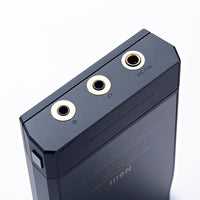
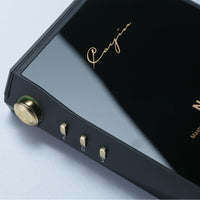
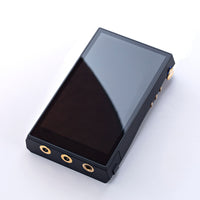
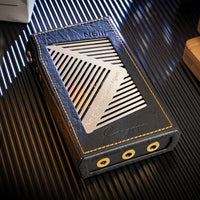

Cayin N6III - Premium DAP with change boards
1 piece in stock
N6iii: Nothing is impossible
Reviews

"The N6iii is a competitively priced Android 12 DAP with two excellent, new and easy-to-swap motherboards that offer very appealing sound signatures to suit a wide range of IEMs and headphones."
 Cayin N6iii Review — Headfonics
"The Cayin R202 is perhaps the greatest motherboard the company has released to date. This is a clever combination of two legendary DAC types, allowing the user to switch between smooth and euphonic, or analog and natural sounding."
 Cayin R202 review — Headfonics

"Cayin again shows that it can create great DAPs, and the N6III is another example. The upgrades over the previous generation are massive, and Cayin managed to keep the footprint similar.
The modular design ensures future performance, as Cayin can release new and upgraded audio cards to increase the unit’s performance as new DAC chips and components come along. With its polished design, experience, and sound quality, the Cayin N6III has entered our Best DAP Recommendations page, eliminating the Shanling M7.
Cayin N6III Review - Headfonia

"This DAP stands out not only for its modular design and compact build but also for the design and performance of its modules. When a new module becomes available, it will be like a new DAP with completely new sound performance."
Cayin N6iii w/C201 and E203 – Twister6 Reviews
Overview
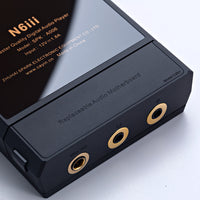
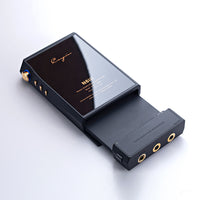
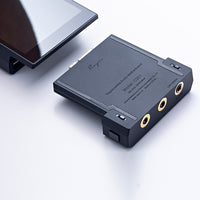
Just like the N6ii, the N6iii continues the innovative approach of using interchangeable audio motherboards, with each board optimized for the characteristics of the DAC and designed for maximum analog circuit performance.
The focus remains on presenting different personalities and music styles, rather than packing all possible features into a "Swiss Army knife" player. At the start of the N6iii project, two important design goals were set. First, despite the trend towards mega-DAPs, Cayin wanted to maintain the portability and ease of use of the N6ii.
Secondly, we received a lot of feedback from N6ii users who wished for a "tool-free" quick-release so they could conveniently swap the audio motherboards. These two requirements posed great challenges to the design and structure of the N6iii.
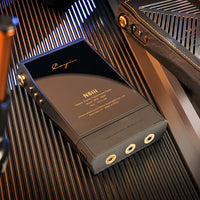
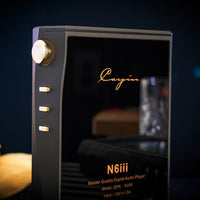
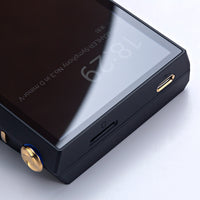
The N6iii features a 4.97-inch display, which is significantly larger than the 4.2-inch screen of the N6ii but can still be comfortably operated with one hand. To avoid making the device bulkier, Cayin refrained from any structural expansion of the case, so the front appears as a continuous screen.
To minimize the width of the DAP, the playback buttons and volume control are placed under the screen. The curved sides improve grip and ensure the device feels comfortable in the hand even with a slightly larger screen. This allows the N6iii to offer an excellent viewing and control experience while its size increases only minimally. In an era of ever-larger DAPs, the N6iii retains its excellent portability.
Quick Release
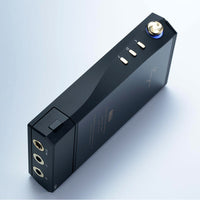
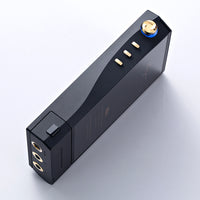
One of the most significant design breakthroughs of the N6iii is the development of a new quick-release mechanism for fast swapping of the audio motherboards. Fortunately, we faced a similar issue during the development of the C9ii. In the following video, you can see how incredibly easy it is to swap the audio motherboards of the N6iii.
New Antenna
The N6iii also features a unique antenna design. In earlier models like the N6ii, the antenna was integrated into the upper rear part of the device and offered relatively low signal gain to avoid interference. In newer models (N8ii, N7, N30LE), Cayin has mounted an external ring antenna on the top of the device, providing high gain and interference-free audio circuits for a better online streaming experience.
In the N6iii, the antenna was relocated to a semi-exposed area directly under the top cover of the N6iii DAP due to strict size constraints. Although this placement results in slightly lower gain than the external antenna design used in the N7, N8ii, and N30LE, it offers a significant improvement over the previous N6ii without increasing the length of the DAP. It provides excellent streaming performance with minimal interference with analog audio processing.
Further Upgrades
Five years after the N6ii, the N6iii brings important upgrades in its main processor, RAM, operating system, and numerous improvements to meet the growing demand for streaming services.
This brings us to the end of the N6iii core design: details of what applies regardless of which audio motherboard you use with the DAP. Now let's move on to what makes each model unique: the audio motherboards.
T201 - NOS vacuum tubes of the highest quality
Unleash the beauty of pure analog sound
The heart of the T201 audio motherboard is two carefully matched NOS miniature vacuum tubes of military-grade JAN6418 from U.S. Raytheon, selected for their musicality, stability, and long-term reliability.
From 3.5mm single-ended to 4.4mm balanced connectors and through headphone output, line-out, and pre-out, switching between tube and transistor sound signatures is possible, allowing each listening mode to unfold its own distinctive sound character: rich, expressive, and unmistakably analog.
Experience warmth, texture, and emotion – reinterpreted for modern portable audio devices.
Key highlights
- Audio motherboard, exclusively developed for Cayin N6iii
- Tube-based architecture with NOS JAN 6418 tubes
- Classic tube musicality with modern optimization for portable devices
- Simple installation within the modular N6iii system

R202 - Discrete Dual R2R/1-Bit DAC Motherboard
The new R202 motherboard for the Cayin N6III builds on the success of the legendary N6II-R01 and offers a sound previously reserved only for R2R flagship DAPs.
With dual R2-R/1-Bit DAC, fully discrete architecture, and 3 sound modes, Cayin raises the bar significantly and offers an incredible price-performance ratio!
Fully discrete, fully symmetrical dual DAC architecture
Contains 320 ultra-precise thin-film resistors with an accuracy of 0.1% (1/1000).
The discrete R-2R PCM DAC consists of 192 high-precision 0.1% thin-film resistors in a symmetrical 24-bit DAC configuration and supports native PCM decoding up to 384 kHz.
The discrete 1-Bit DSD DAC consists of 128 high-precision 0.1% thin-film resistors in a symmetrical 1-Bit DAC architecture and supports native DSD256 decoding.
Dual digital audio processor
Equipped with powerful algorithmic processing, the R202 supports decoding up to PCM 768 kHz and DSD512 with sample rate and format conversion.
Three decoding modes: Auto, R-2R, and 1-Bit
Auto Mode – Intelligent format matching. In Auto Mode, the system intelligently selects the optimal DAC architecture based on the source format – PCM signals are decoded by the R-2R DAC, while DSD signals are processed by the 1-Bit DAC. This seamless switching ensures that each decoding is performed at maximum performance and delivers an authentic, faithful sound reproduction that preserves the full character and nuances of the original recording.
R-2R Mode: Delivers a rich, smooth, and emotionally engaging sound with a spacious, relaxed playback.
1-Bit Mode: Provides a more natural reproduction of high overtones with a clear soundstage and precise imaging.
Four-channel, fully symmetrical headphone amplifier
The amplifier section, based on a fully symmetrical DAC architecture, uses six operational amplifiers of the OPA1612 and OPA1662 types to form a fully symmetrical differential signal chain. Four INA1620 operational amplifiers form the four-channel symmetrical headphone amplifier with two parallel internal channels per chip and four-chip symmetrical drive.
This enables complete differential amplification of analog audio signals and ensures precise detail reproduction and exceptional dynamics.
Matrix-structured design for clean power supply
The headphone amplifier is powered by a powerful dual-polarity boost power supply based on the LT8582, which, through LC filtering, ensures an extremely clean power supply with ripple suppression in the microvolt range, significantly improving dynamics during load fluctuations.
The DAC and operational amplifiers are powered by a matrix of TPS61087 and TPS61240 converters, followed by 7 ultra-low-noise LDOs that independently supply the digital, analog, and clock sections. This minimizes noise density and forms a robust foundation for high-resolution audio output.
Four-channel precise analog volume control
Uses the fully symmetrical volume control chip JRC NJW1195, which allows a 256-step adjustment in 0.5 dB increments. Through strict parameter analysis and acoustic tuning, 100 core levels were carefully selected to ensure low distortion and excellent channel balance across the entire adjustment range – for pure sound quality with precise and efficient volume control.
Headphone output only: Pure and purposeful
On the limited space of the circuit board, a dedicated audio circuit architecture was carefully optimized for direct load driving with fully symmetrical signal transmission and amplification.
The R202 only has a PO output (Phone Out) without an LO function (Line Out) – a design decision made to ensure the purity and focus of the audio output performance.
Battery Life
| Mode | 3.5mm SE | 4.4mm BAL |
| Auto | 15hrs | 15hrs |
| R-2R | 16hrs | 16hrs |
| 1-Bit | 14hrs | 14hrs |
Technical details


C201 Audio Motherboard – Parallel Amplifier, Parallel Full-Differential Matrix DAC
With the C201, Cayin used a Cirrus Logic DAC chip in a portable product for the first time. In the early 2000s, the DAC chips CS4398 and PCM1792 were predominant in the audio industry, and Cayin extensively used them in its early DACs and CD players.
The CS43198 chip included in the C201 is no stranger to audiophiles, as it is a power-saving, high-quality DAC developed by Cirrus Logic based on the CS4398. It is widely recognized and frequently used in the audio industry. In the C201, Cayin uses eight CS43198 chips to form a "Parallel Full Differential Matrix DAC" design.
The core principle is that the digital audio processor (FPGA) in the N6iii main unit feeds each DAC individually with I²S signals. All DACs operate in MONO mode and output differential signals (L+, L-, R+, and R-). Four DACs form a group, and their outputs are connected in parallel to produce a complete differential output channel.
The power supply and peripheral circuits for each DAC chip are fully discrete and symmetrical, ensuring extremely stable DAC performance.
This design ensures precise phase alignment for all DACs, while the low-jitter synchronous clock technology minimizes distortion in the parallel DAC output and significantly improves sound density and overall audio performance.
High-precision cascade volume control
The C201 also features a unique cascade volume control system. It uses four passive Nisshinbo volume control chips (NJU72315) arranged in a cascade. We used four passive Nisshinbo volume control chips (NJU72315), with two chips connected in series to control one channel each. When the volume control chip of the first stage partially adjusts the volume (in 2-dB steps), the audio signal passes through the second volume control chip for further adjustment.
After each volume stage follows a buffer circuit with independent operational amplifiers, which significantly improves load capacity and reduces distortion. The advantage is that the control range for each stage is smaller and more precise, ensuring a smoother volume control process. This ensures that the left and right channels maintain constant signal levels across the entire volume range, resulting in clearer, purer sound with improved transparency.
The Nisshinbo NJU volume controller is a passive device, and its low power consumption and low heat generation make it the ideal solution for DAP implementation.
Parallel amplifiers for headphone amplification
The C201 uses four Texas Instruments OPA1622 chips, each configured in parallel to control the headphone load. Combined with the buffer circuits, this significantly improves control, withstands higher loads, and reduces output impedance. This circuit design is a tribute to the headphone amplifier circuit of the classic N8 DAP.


C201 Specifications

Let's start with an all-rounder
Instead of diving too deeply into technical details, let us summarize the key features of the N6iii with the C201 audio motherboard: 1. Long battery life: Despite the eight DACs, the N6iii – equipped with a 9000mAh battery – can achieve 12 hours of balanced PO output and over 14 hours of unbalanced PO output. 2. 3. 4.
Low Heat Generation
Our tests show that after more than three hours of continuous operation, the surface temperature rose by only about 7 degrees thanks to the low power consumption of the DAC and circuit design.
Powerful Specifications
With its advanced DAC architecture, volume control, and circuit design, the N6iii delivers impressive performance. At the 4.4mm balanced PO, it achieves a dynamic range and signal-to-noise ratio of 130 dB with a total harmonic distortion of 108 dB (0.0004%).
Comprehensive Functionality
As the first audio motherboard for the N6iii, the C201 offers balanced performance and powerful features. In addition to the PO (headphone output), it also supports a fully independent LO (line output) for both unbalanced and balanced connections, allowing users to easily connect external amplifiers.
For the record: Our upcoming audio motherboard will follow a specialized approach. We will aim to deliver ultimate performance in a compact form factor by focusing on a specific function each time.
Sound Characteristics
Now, let us briefly describe the sound characteristics of the N6iii equipped with the C201. The sound offers excellent transparency and layering with an ethereal, airy quality. At the same time, it delivers powerful energy in dynamic moments and provides tight, deep bass reproduction.
To emphasize once again: Whether you focus on technical specifications or sound descriptions, the true value of a HiFi product can only be fully appreciated through practical listening. The ear is the final judge.
E203 Audio Motherboard -
The evolution of ESS SABRE technology
The E203 audio motherboard elevates the N6iii platform to the next level by integrating the ESS ES9039SPro DAC chip, which offers an extremely high dynamic range, ultra-low distortion, and unadulterated sound quality.
The E203 boasts advanced features such as a dedicated I/V converter circuit, LPF, and buffer stages that further enhance the performance of the ESS chip and refine its sonic signature.
In addition, the E203 features Dual Amplifier Operation (DAO) and offers three selectable modes: Class A, Class AB, and Hyper Mode, giving the user full control over their listening experience, whether they prefer a smooth, classic sound or a more dynamic and energetic presentation.


E203 Specifications

